
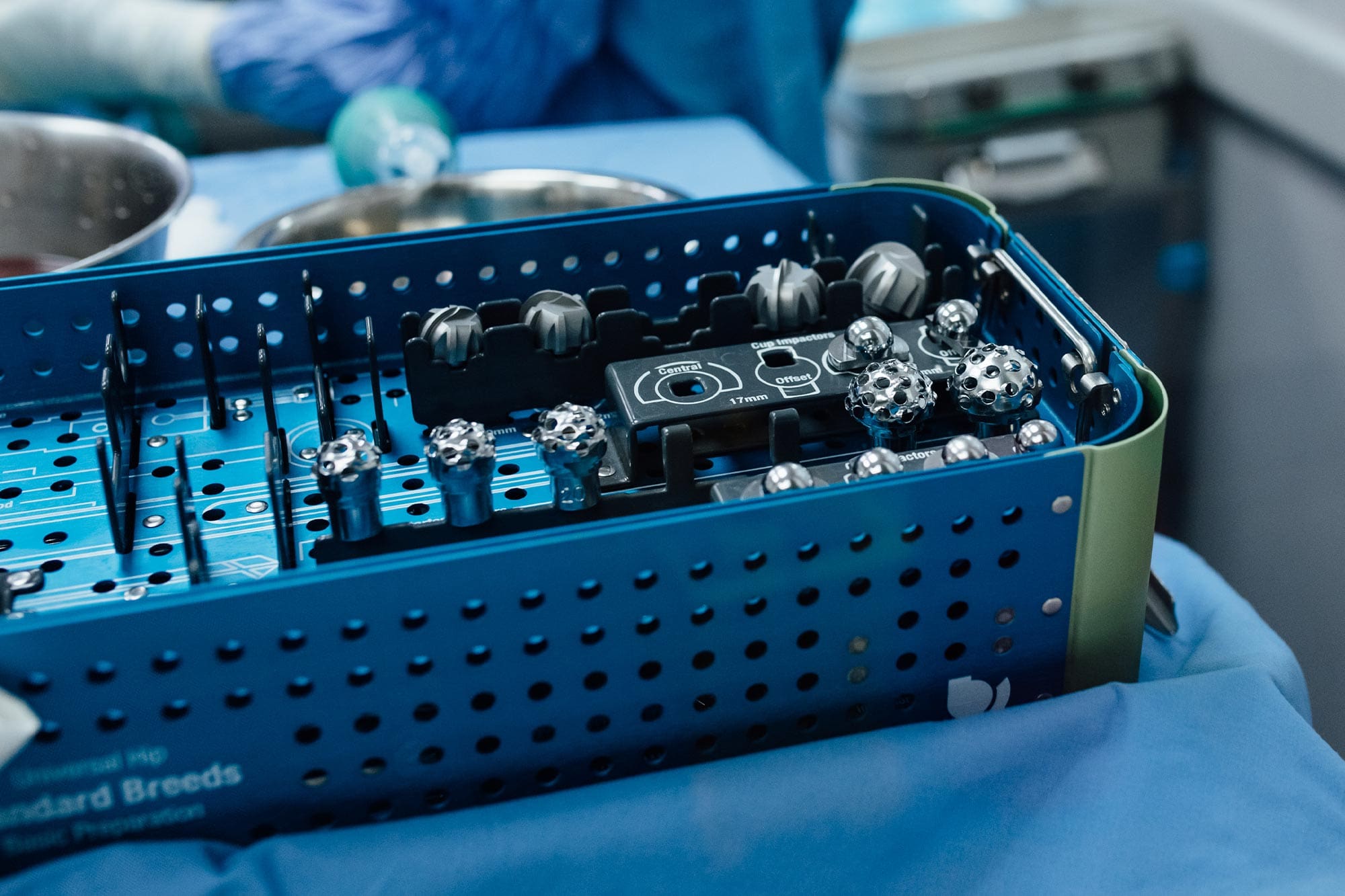
Orthopedic Procedures
When your pet is limping, slowing down, struggling to rise, or recovering from an injury, the right orthopedic care can make a meaningful difference in their comfort and mobility. Veterinary Specialty Center provides advanced cat and dog orthopedic surgery in Bannockburn, IL for pets with bone, joint, muscle, tendon, and ligament conditions.
Our board-certified surgeons combine advanced diagnostics, minimally invasive techniques, innovative treatments, and state-of-the-art technology to help restore function and reduce pain. From arthroscopy and TPLO surgery to total hip replacement and complex fracture repair, we create a care plan tailored to your pet’s needs.

When Should Pets Be Evaluated for Orthopedic Concerns?
Orthopedic conditions can affect pets at any age. Some problems develop gradually, such as hip dysplasia or osteoarthritis, while others happen suddenly after an injury, fall, or traumatic event. Because pets often hide pain, signs may appear as subtle changes in the way they move, rest, or interact with the family.
Pets may benefit from an orthopedic evaluation if they show signs such as:
-
Limping or favoring one leg
-
Trouble standing, sitting, climbing stairs, or jumping
-
Stiffness after rest or exercise
-
Swelling around a joint or limb
-
Pain when touched or handled
-
Decreased activity or reluctance to play
-
Sudden non-weight-bearing lameness
-
Difficulty recovering after an injury
Orthopedic Conditions We Treat in Cats & Dogs
Veterinary Specialty Center provides orthopedic care for a wide range of conditions affecting dogs and cats. Some pets come to us for a planned procedure after months of discomfort, while others need urgent evaluation after an injury.
Common orthopedic conditions we treat include:
- Cranial cruciate ligament, or CCL, injuries
- Meniscal tears
- Hip dysplasia
- Elbow dysplasia
- Osteoarthritis
- Patellar luxation
- Fractures
- Joint dislocations
- Limb deformities
- Growth deformities
- Developmental and juvenile orthopedic disorders
- Medial shoulder instability
- Shoulder disorders and tendon injuries
- Traumatic tendon injuries
- Osteochondritis dissecans, or OCD
- Bone cancer
- Complex orthopedic injuries
Our team also manages rare and complicated orthopedic cases that may require advanced imaging, surgical planning, or collaboration across multiple specialties.
Advanced Orthopedic Diagnostics for Pets
Accurate diagnosis is the first step toward the right treatment plan. Orthopedic conditions can be complex, and pets cannot tell us exactly where it hurts. Our team uses physical exams, gait assessment, and advanced imaging to locate the problem and plan treatment.
Diagnostic tools may include:
-
64-slice computer-assisted tomography, or CAT scan
-
3 Tesla magnetic resonance imaging, or MRI
-
Advanced digital radiography
-
Fluoroscopy
-
Arthrocentesis, or joint fluid analysis
-
Musculoskeletal ultrasound
-
Video gait analysis
-
Diagnostic arthroscopy
These tools allow our surgeons to evaluate bones, joints, ligaments, tendons, and soft tissue structures with greater detail.

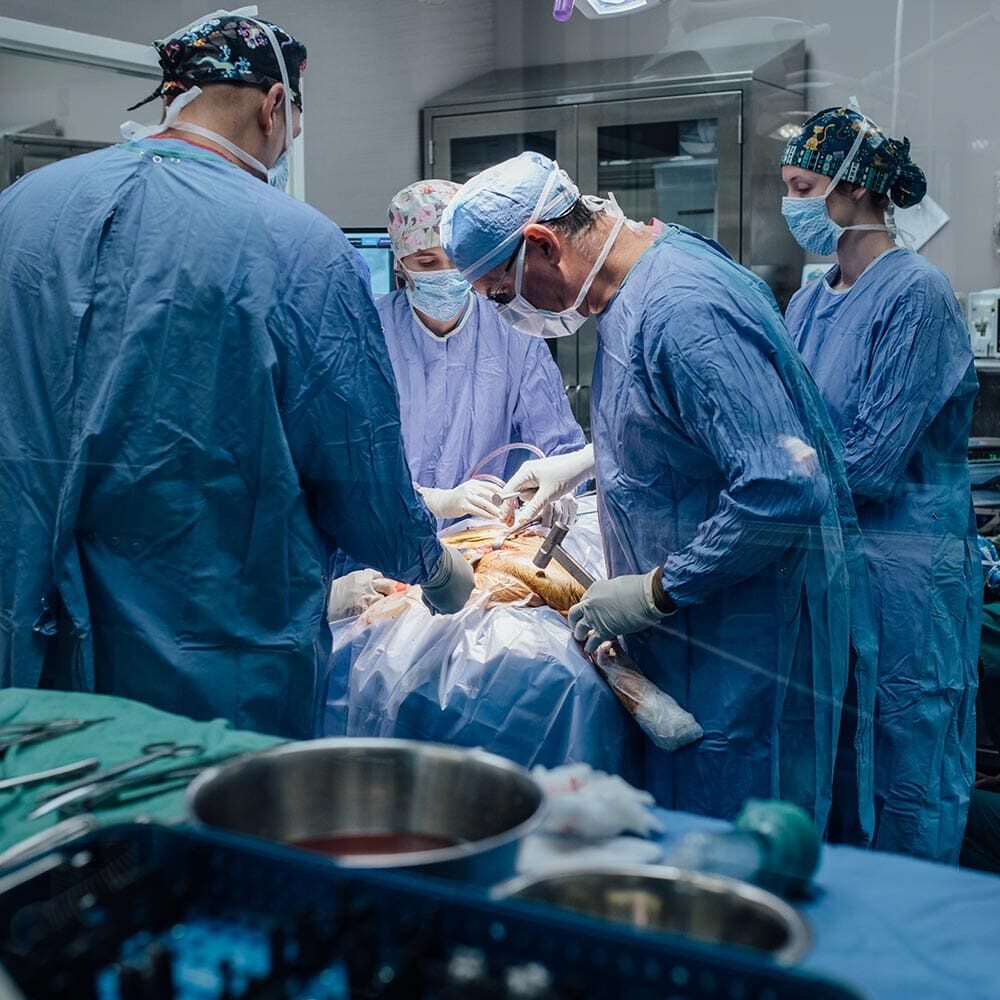
Pre-Surgical Workup & Postoperative Recovery
Successful orthopedic care begins before surgery and continues through recovery. Our collaborative team may include surgeons, radiologists, internal medicine doctors, anesthesiologists, rehabilitation professionals, and critical care veterinarians, depending on your pet’s condition and health needs.
Before surgery, diagnostic testing helps us identify the cause of your pet’s orthopedic problem and evaluate any underlying health concerns that could affect anesthesia, surgery, or healing. This may include concerns such as heart disease, liver disease, or other medical conditions that require additional planning.
After surgery, your pet’s recovery is carefully monitored by our critical care specialists. Depending on the procedure, your pet may need activity restriction, pain management, incision care, rehabilitation therapy, recheck exams, and follow-up imaging. Our team will walk you through what to expect at each stage so you can support your pet’s healing at home.
Orthopedic Procedures We Perform
Non-Surgical Treatment Options
Not every orthopedic condition requires surgery. In some cases, non-surgical care may help reduce pain, improve mobility, and support long-term comfort. These treatments may be recommended on their own or as part of a broader care plan before or after surgery.
Non-surgical orthopedic options may include:
-
Rehabilitation therapy
-
Integrative therapy
-
Pain Management
-
Weight Management Therapy
-
Activity Modification
What to Expect at an Orthopedic Consultation
Your pet’s first orthopedic visit gives our team time to understand their history, symptoms, lifestyle, and previous test results. The surgeon will perform a physical exam, evaluate your pet’s gait and mobility, and discuss recommended diagnostics.
Depending on your pet’s needs, the next step may include imaging, joint evaluation, lab testing, conservative care, or surgical planning. We will explain the diagnosis, review treatment options, and answer your questions so you can make an informed decision for your pet.