
Cancer in Cats: Symptoms and Signs to Look Out For
Blog Summary
Cancer in cats is often difficult to detect in its early stages due to the subtle and nonspecific nature of clinical signs. This blog explores the key symptoms associated with feline cancer, from unexplained weight loss and persistent vomiting to non-healing wounds and changes in behavior. It also highlights the most commonly diagnosed cancer types in cats, including lymphoma, squamous cell carcinoma, mammary gland tumors, and soft tissue sarcomas.
This article emphasizes the value of early recognition, collaborative specialty care, and advanced diagnostic imaging offered at Veterinary Specialty Center. It outlines the team’s comprehensive diagnostic process including imaging, cytology, and histopathology and presents a range of treatment options available through a referral-based veterinary oncology service, such as surgery, chemotherapy, radiation therapy, and immunotherapy.
Introduction:
Cancer in cats can be deceptively silent in its onset, often presenting with subtle clinical signs that are easily mistaken for age-related changes or minor health concerns. This inherent subtlety, paired with the feline tendency to mask discomfort, frequently results in delayed detection. However, early identification remains one of the most significant factors influencing treatment outcomes. At Veterinary Specialty Center in Bannockburn, IL, our residency-trained and board-certified oncology, radiology, internal medicine, and surgery teams collaborate to provide advanced diagnostic evaluation and tailored therapeutic interventions for cats with suspected or confirmed neoplastic disease.
Understanding Cancer in Cats: A Clinical Overview
Cancer in cats encompasses a wide range of malignancies, each characterized by the uncontrolled proliferation of abnormal cells. These cells may remain localized or metastasize to distant organs via the lymphatic or circulatory system. While feline cancer can affect virtually any tissue or organ, the biological behavior, clinical trajectory, and treatment options differ significantly depending on the type and stage of disease.
Common contributors to oncogenesis in cats include viral infections such as feline leukemia virus (FeLV), genetic predisposition, environmental exposures, and chronic inflammation. The most frequently diagnosed cancers include lymphoma, squamous cell carcinoma, mammary gland tumors, and soft tissue sarcomas. Because cats rarely display overt signs of illness until disease is advanced, timely evaluation is essential when clinical signs persist or escalate.
Clinical Signs That May Indicate Cancer in Cats
While no single sign is pathognomonic for cancer in cats, a combination of clinical changes often prompts further investigation. At Veterinary Specialty Center, we emphasize the importance of early recognition and thorough evaluation when the following signs are observed:
Unexplained Weight Loss
Weight loss, particularly when progressive and unrelated to dietary changes, is a common early manifestation of cancer in cats. It may result from metabolic changes associated with cancer, reduced appetite, or malabsorption due to gastrointestinal disease. This symptom warrants timely diagnostic workup even in the absence of other clinical concerns.
Palpable Masses or Subcutaneous Nodules
Any new or enlarging mass, whether visible externally or palpable during physical examination, should be assessed. Neoplastic masses may present as firm, irregular, non-movable swellings and can be located on the skin, in mammary tissue, or within internal organs. Cytologic sampling or biopsy is often required for characterization.
Chronic Vomiting or Diarrhea
Persistent gastrointestinal disturbances may reflect cancer within the stomach, intestines, pancreas, or mesenteric lymph nodes. In many cases, these signs are mistakenly attributed to dietary intolerance or inflammatory bowel disease. Advanced imaging and tissue sampling are often needed to distinguish between benign and malignant causes.
Labored or Noisy Breathing
Dyspnea or changes in respiratory effort can be indicative of thoracic neoplasia such as pulmonary carcinoma, lymphoma, or metastatic disease. If respiratory signs emerge, thoracic radiographs or CT imaging may be used to identify pulmonary or mediastinal involvement.
Anorexia or Shifts in Water Consumption
Decreased appetite, aversion to food, or increased thirst may accompany several types of cancer. These changes can indicate discomfort, nausea, or metabolic disruption and should prompt further evaluation, particularly in older cats.
Wounds or Skin Lesions That Fail to Heal
Non-healing sores or ulcerated areas of skin can indicate squamous cell carcinoma or other dermal malignancies. These lesions often persist despite routine wound care and require biopsy to determine etiology.
Changes in Urination or Defecation Patterns
Straining, frequent elimination, or evidence of blood may point to cancers affecting the bladder, colon, or rectum. These changes should never be dismissed as behavioral, especially in mature or geriatric cats.
Common Types of Cancer Seen in Cats
Veterinary Specialty Center sees a broad spectrum of feline cancers across our referral network. Below are several of the most frequently diagnosed malignancies in cats, along with their distinguishing features and clinical significance.
Lymphoma
Lymphoma is the most prevalent feline malignancy, often associated with FeLV infection but also occurring independently. It can arise in the gastrointestinal tract, lymph nodes, kidneys, nasal passages, and central nervous system. Clinical signs vary based on location but often include vomiting, diarrhea, weight loss, or neurologic signs.
Squamous Cell Carcinoma
Squamous cell carcinoma is an aggressive epithelial cancer most often seen on sun-exposed areas such as the ears and nasal planum, or in the oral cavity. Oral tumors frequently present with halitosis, drooling, difficulty eating, or facial swelling. Early intervention is critical, as these tumors tend to invade locally and are challenging to treat once advanced.
Mammary Gland Tumors
Mammary gland tumors in cats are predominantly malignant, with a high risk of metastasis. Spaying before the first heat cycle dramatically reduces the risk. These tumors are typically firm, nodular, and located along the mammary chain. Surgical excision is the treatment of choice, often followed by adjunctive therapy.
Soft Tissue Sarcomas
These tumors arise from connective tissue and may develop at sites of chronic inflammation or prior injections. They are often slow-growing initially but carry a high potential for local invasion and recurrence. Wide surgical margins and advanced imaging are essential for effective management.
Oral Neoplasia
Oral cancers, including squamous cell carcinoma and fibrosarcoma, are common in older cats. Clinical signs may include bleeding from the mouth, weight loss, difficulty grooming, or visible oral masses. These tumors often require a multimodal approach, including surgery, radiation, or palliative care.
Advanced Diagnostic Evaluation and Staging
A definitive diagnosis of cancer in cats relies on a structured diagnostic approach. At Veterinary Specialty Center, our specialists utilize a combination of imaging, laboratory testing, cytology, histopathology, and immunophenotyping to accurately characterize the disease and guide treatment recommendations.
Diagnostic Imaging
Advanced imaging modalities, including digital radiography, ultrasound, and CT, are used to localize tumors, assess metastatic spread, and guide biopsy collection. Cross-sectional imaging is particularly valuable for staging thoracic and abdominal neoplasms.
Laboratory Assessment and Cytology
Routine bloodwork provides insight into organ function and systemic health, while fine-needle aspirates or core biopsies yield cellular material for diagnostic interpretation. All samples are evaluated by board-certified pathologists.
Multidisciplinary Case Review
Every oncology case at Veterinary Specialty Center benefits from collaborative input among medical, surgical, diagnostic imaging, and internal medicine specialists. This multidisciplinary model ensures each patient receives an individualized and comprehensive care plan.
Treatment Options Available Through Specialty Care
Management of cancer in cats varies significantly depending on tumor type, biological behavior, and patient factors. At Veterinary Specialty Center, we provide evidence-based therapeutic options designed to extend both longevity and quality of life.
Surgery
Surgical intervention remains a cornerstone of treatment for many localized cancers. Our soft tissue surgeons perform complex resections with an emphasis on achieving clear margins while preserving function.
Chemotherapy
Chemotherapeutic protocols are used to address systemic or aggressive malignancies such as lymphoma. Our oncology team tailors drug selection, dosing, and scheduling to maximize therapeutic effect while minimizing adverse reactions.
Radiation Therapy
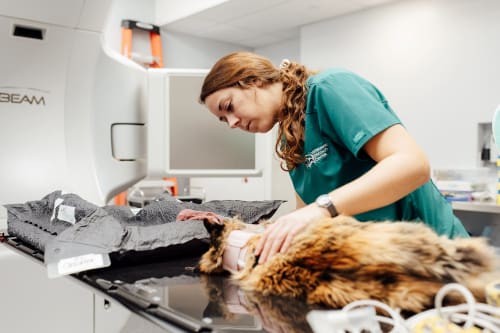
Radiation therapy is offered for tumors that are not surgically resectable or as an adjunct to surgery. It is especially useful for treating nasal tumors, oral cancers, and incompletely excised soft tissue sarcomas.
Immunotherapy
Immunotherapy represents an emerging modality that leverages the cat’s immune system to recognize and attack cancer cells. Select cases may benefit from monoclonal antibody therapy or tumor-specific vaccines as part of a broader treatment strategy.
Referral for Feline Oncology Care in Bannockburn, IL
A cancer diagnosis in your cat can be difficult to process, but specialty veterinary care offers advanced options that may improve comfort and outcomes. At Veterinary Specialty Center, we provide an integrated and compassionate approach to oncology, combining clinical expertise with cutting-edge tools to deliver personalized treatment plans. If your family veterinarian has referred your cat for evaluation or you’re seeking a second opinion, we invite you to contact us at (847) 459-7535 to schedule a consultation. Our goal is to offer clarity, confidence, and support at every stage of your cat’s cancer care journey.
Recent Posts
About Us
Veterinary Specialty Center is a privately-owned, 24/7 emergency and specialty animal hospital located in Bannockburn, IL. Since 1976, their team of board-certified specialists has delivered advanced, compassionate care, leading the way with innovative treatments and a collaborative approach.