
Cat Limping Back Leg: Injury vs Joint Disease
A cat limping on a back leg is usually dealing with either an injury, such as a bite wound, sprain, fracture, or torn ligament, or a joint condition like arthritis, patellar luxation, or hip dysplasia. Injuries tend to cause sudden limping in one leg, while joint disease typically develops gradually with stiffness, and any limp that lasts more than a day or appears with severe pain needs a veterinary exam.
Cats are experts at hiding discomfort, so a visible limp often means the problem is significant enough that your cat can no longer mask it. Some causes are minor and heal quickly with proper care, while others, including a few true emergencies, need immediate attention. At Veterinary Specialty Center in Bannockburn, Illinois, our board-certified surgeons and emergency team evaluate feline lameness and treat orthopedic conditions in cats as well as dogs. This blog explains the most common reasons for a cat limping back leg, how to tell an injury from joint disease, when to call your veterinarian, and how the cause is diagnosed and treated.
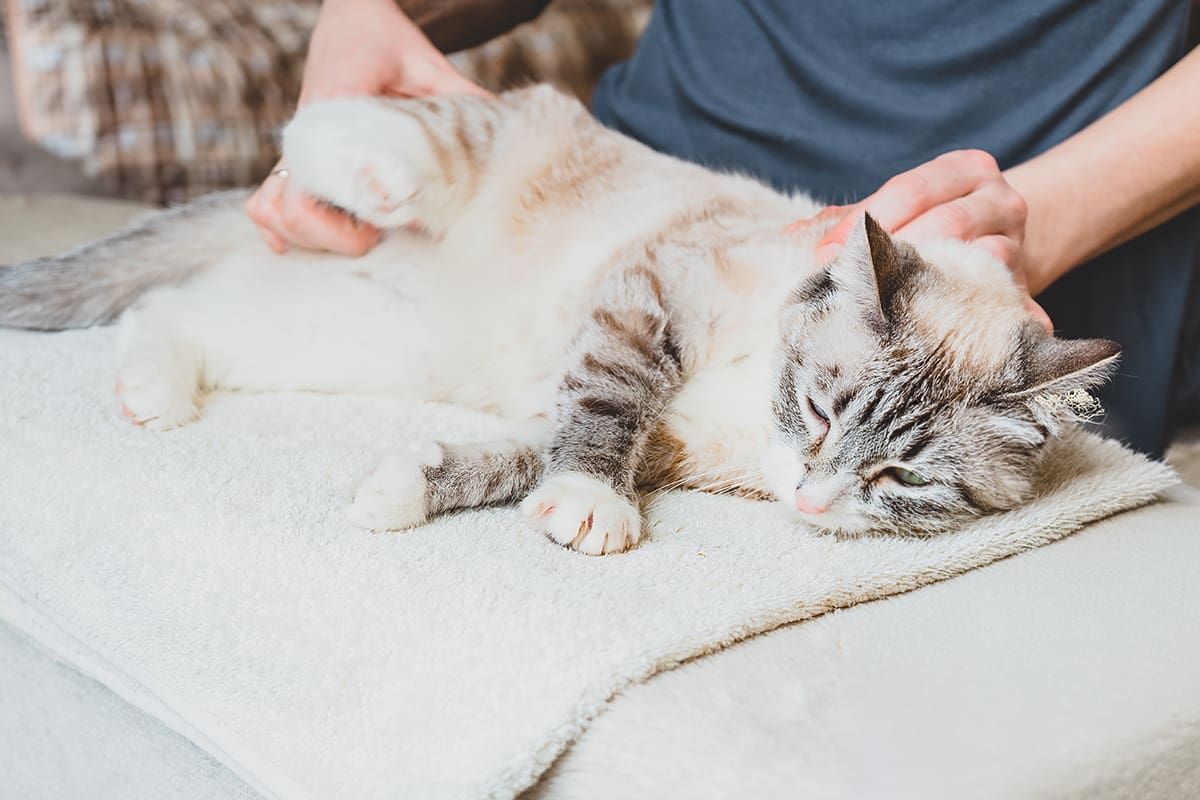
What Causes a Cat to Limp on a Back Leg?
Hind-leg lameness in cats has many possible catagories, ranging from a simple paw injury to complex joint disease. Understanding the main categories of cat limping back leg problems helps you describe what you’re seeing to your veterinarian.
Injuries and Trauma
Cat fights often lead to bite wounds that seal over quickly and develop into painful abscesses a few days later. Falls, car accidents, and getting caught in furniture or doors can cause sprains, fractures, and dislocations. Torn nails, embedded foreign objects, and cuts to the paw pads are also common reasons for a cat limping back leg, especially in cats who spend time outdoors.
Joint and Bone Disease
Osteoarthritis affects a large share of senior cats and often involves the hips, knees, and spine. Patellar luxation, where the kneecap slips out of its groove, occurs more often in certain breeds such as the Devon Rex and Abyssinian. Slipped capital physeal fracture is seen more frequently in larger breeds like the Maine Coon. These conditions often explain a cat limping back leg on and off for months rather than days. Although less common in cats than dogs, they can also tear the cranial cruciate ligament in the knee, with overweight cats being more predisposed to this injury.
Causes Beyond the Bones and Joints
Some back-leg problems aren’t orthopedic at all. A blood clot that lodges near the base of the spine, sometimes called a saddle thrombus, can cause sudden weakness or paralysis in one or both hind legs and is often linked to heart disease. Diabetic cats may develop nerve damage that causes them to walk flat on their hocks. Both situations require prompt veterinary care, and neither should be mistaken for a minor limp that will pass on its own.
How Can I Tell if My Cat’s Limp Is From an Injury or Joint Disease?
Only a veterinary exam can confirm the cause, but the timing and pattern of the limp provide helpful clues. Noting what you observe before your appointment, without handling the painful leg, can give your veterinarian valuable information. Write down when you first noticed the limp and whether it has changed. A video can often be helpful.
Clues That Point Toward an Injury
When an injury is behind a cat limping back leg, you may notice:
- A limp that appeared suddenly, often after time outdoors or a fall
- Lameness in just one back leg
- Swelling, warmth, or a wound on the leg or paw
- A strong reaction or hissing when the leg is touched
- Holding the leg completely off the ground
- Excessive licking of a specific spot
Clues That Point Toward Joint Disease
Joint conditions usually develop over weeks or months. A cat limping back leg because of arthritis or a chronic knee problem may seem stiff after naps, jump less often, or hesitate before climbing. The limp may shift between legs or seem worse on cold days, and many owners also notice reduced grooming or litter box accidents. Middle-aged and older cats are most commonly affected, though joint disease can start earlier in cats with breed-related conditions or old injuries.
When the Answer Is Both
Injury and joint disease can overlap. A cat with arthritis may injure a stiff joint more easily, and an old fracture or ligament tear can eventually lead to arthritis. That’s one reason a thorough evaluation is so helpful, even when the cause seems obvious. A cat limping back leg after a minor fall, for example, may turn out to have an underlying knee problem that made the joint more vulnerable in the first place.
When Should a Limping Cat See a Veterinarian?
Any cat limping back leg for more than 24 hours should see a veterinarian, and some signs call for emergency care right away. Because cats hide pain so well, waiting to see if a limp resolves can allow a treatable problem to worsen.
Signs That Need Emergency Attention
Seek care immediately if your cat has:
- Sudden inability to use one or both back legs, especially with crying or panting
- Back legs or paws that feel cold, or paw pads that look pale or bluish
- An obvious deformity, open wound, or suspected broken bone
- Trouble breathing, collapse, or signs of severe pain
- A recent fall from a height or contact with a vehicle
Veterinary Specialty Center offers 24-hour emergency and critical care for situations like these, including after-hours and weekend emergencies.
When to Schedule an Appointment
Mild limping, stiffness, or reluctance to jump that lasts more than a day or keeps returning deserves an exam with your primary care veterinarian. Never give your cat over-the-counter pain relievers, as several common human medications are toxic to cats, even in small amounts. Your veterinarian can recommend safe, cat-specific options once the cause is known. Early evaluation of a cat limping back leg often means simpler treatment and a faster recovery.
How Do Veterinarians Diagnose and Treat Hind-Leg Lameness in Cats?
Finding the cause starts with a careful history and exam, followed by imaging when needed. Treatment then depends on whether the problem is an injury, joint disease, or something else entirely.
The Diagnostic Process
When evaluating a cat limping back leg, your veterinarian will ask when the limp started, check the paw and leg for wounds or swelling, and gently assess each joint for pain, instability, or reduced motion. Cats often freeze in the exam room, so a short video of your cat walking at home can be especially helpful. Radiographs help identify fractures, dislocations, arthritis, and knee problems, and sedation may be used to keep your cat comfortable and still. If a saddle thrombus is suspected, heart testing is also recommended.
Common Treatment Paths
Minor wounds and abscesses often respond to veterinary cleaning, drainage, and prescribed medications. Arthritis is typically managed with cat-safe pain control, weight management, and changes around the home. Fractures, dislocations, torn cruciate ligaments, and severe patellar luxation may require surgery from a board-certified surgeon. Many cats recover remarkably well after orthopedic surgery, often returning to jumping and climbing once healing is complete. Rehabilitation, restricted activity, and follow-up X-rays support healing, and your veterinary team will tailor the recovery plan to your cat’s temperament and home environment.
Helping Your Cat Get Back on Their Feet
A cat limping back leg can signal anything from a minor paw injury to a serious joint condition or emergency. Paying attention to how suddenly the limp started, which legs are affected, and how your cat behaves at home helps your veterinarian find the answer faster. Prompt care gives your cat the best chance at a comfortable, active life.
Whatever is behind a cat limping back leg, our team at Veterinary Specialty Center can help. We work with primary care veterinarians across the Chicago area to diagnose and treat orthopedic problems in cats and dogs. Our AAHA-accredited hospital in Bannockburn offers board-certified surgeons, advanced imaging, rehabilitation, and round-the-clock emergency care. Learn more about our orthopedic surgery services, including cruciate ligament repair, or call (847) 459-7535 to schedule a consultation.
Recent Posts
About Us
Veterinary Specialty Center is a privately-owned, 24/7 emergency and specialty animal hospital located in Bannockburn, IL. Since 1976, their team of board-certified specialists has delivered advanced, compassionate care, leading the way with innovative treatments and a collaborative approach.